




























In manufacturing plants, equipment such as motors, pumps, fans, air compressors, and gearboxes all generate vibration during operation. Crucially, most mechanical failures do not occur abruptly; instead, they begin with subtle changes in vibration patterns.
This is why industrial vibration sensors have become vital tools for Condition-Based Maintenance (CBM) and predictive maintenance strategies. Continuous vibration monitoring enables maintenance teams to detect issues early, minimize downtime, and prevent catastrophic failures. So, what causes these vibrations? How do sensors measure them? And why is vibration consistently the earliest warning signal? Let’s explore these questions in detail with Vu Le in the article below.
I. What causes vibration in rotating equipment?
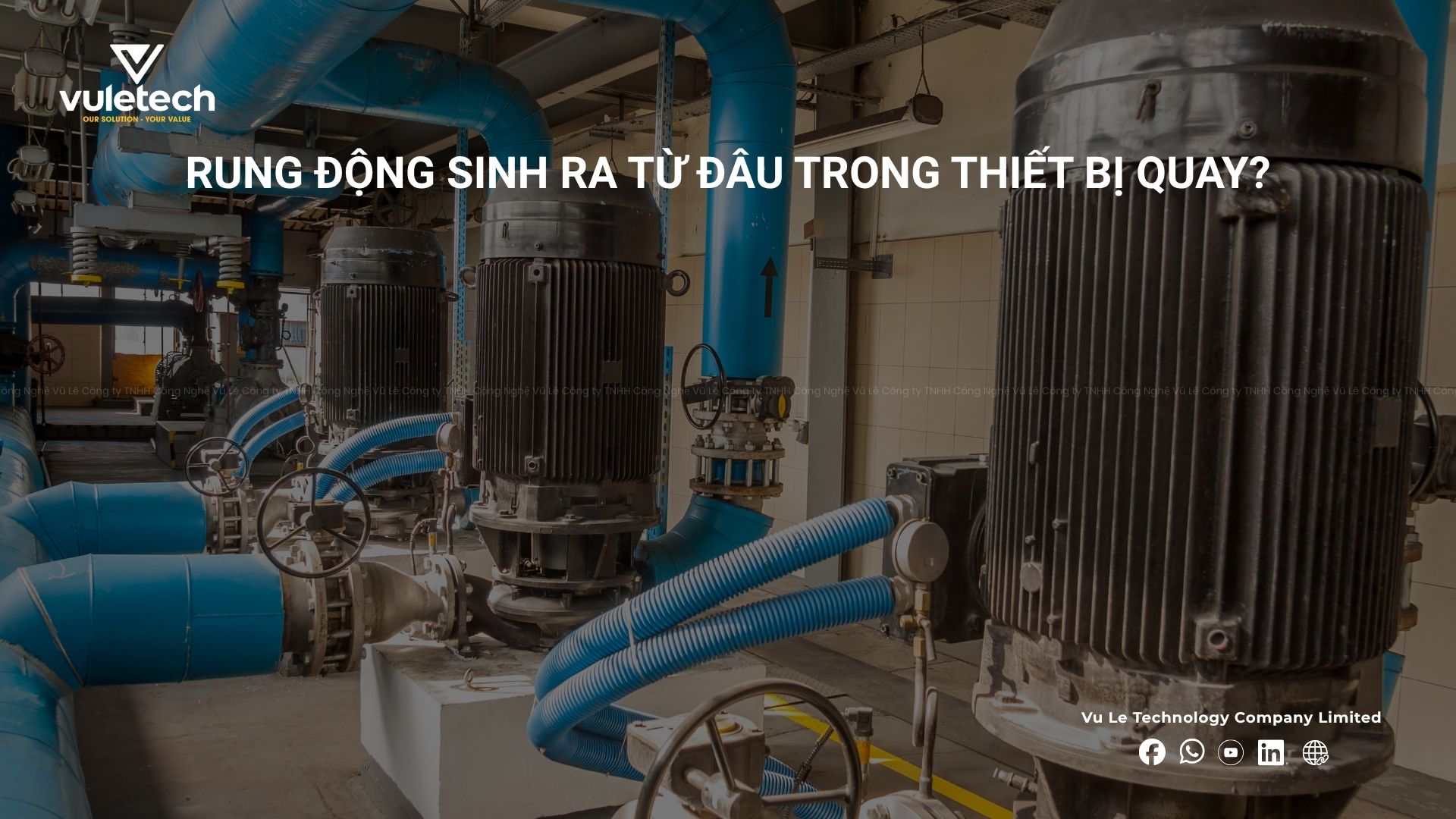
Any rotating equipment generates inherent vibration during operation. However, when mechanical faults—such as imbalance, misalignment, worn or damaged bearings, loose mounting, increased friction, overload, or mechanical resonance—occur, the equipment’s vibration characteristics change abnormally. As these issues begin to develop, vibration amplitude often rises at a very early stage, well before any significant temperature increase or audible noise becomes apparent. Consequently, vibration is considered the earliest warning signal for detecting faults in rotating equipment.
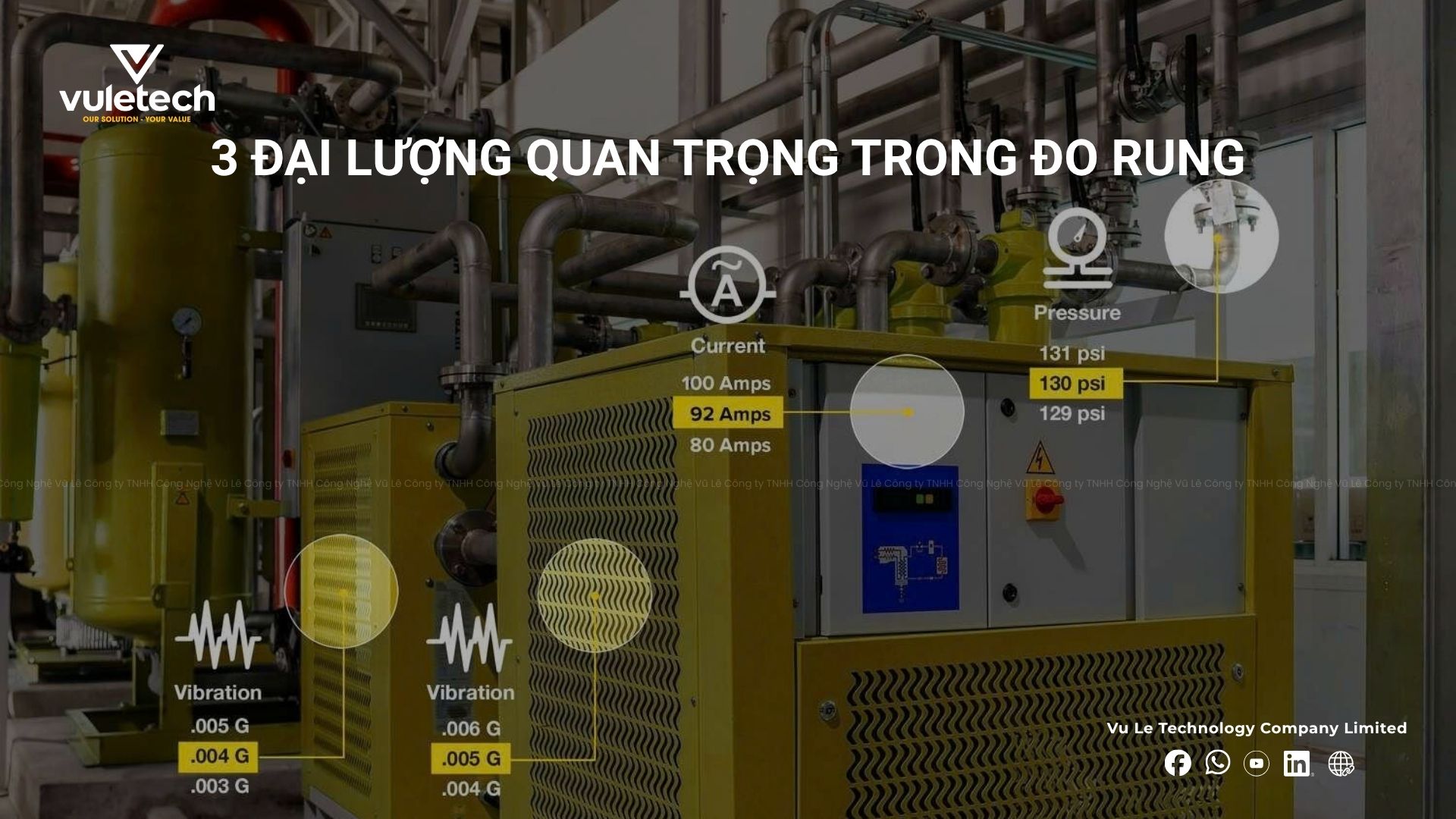
In vibration monitoring, signals are typically analyzed based on three key parameters to comprehensively assess the mechanical condition of the equipment.
1. Acceleration (g or m/s²):
Sensitive to high-frequency oscillations, this parameter facilitates the early detection of faults such as bearing degradation, impacts, or abnormal impulses; consequently, it is the most common measurement type in modern vibration sensors.
2. Velocity (mm/s):
Reflects the overall vibration level of the machine. It is commonly used to assess general condition against industrial standards (such as ISO 10816/20816) and is suitable for classifying safety levels or triggering alarms.
3. Displacement (µm):
Suitable for low-speed rotating equipment or large shafts, allowing for clearer monitoring of shaft deflection and structural oscillation.
In practice, industrial vibration sensors typically measure acceleration first and then convert the signal to velocity or displacement to enable in-depth analysis and more accurate diagnostics.
III. How do industrial vibration sensors work?
Most modern industrial vibration sensors utilize MEMS or piezoelectric technology to measure mechanical oscillations and convert them into electrical signals. The operating principle is straightforward: when the equipment vibrates, mechanical acceleration is generated; the sensing element converts this acceleration into a corresponding electrical signal, which is then processed and output via standard interfaces such as analog, IO-Link, wireless, or IIoT. The data is subsequently transmitted to a PLC, gateway, or cloud system for storage and analysis.
In modern systems, these sensors go beyond simple measurement; they offer continuous 24/7 monitoring, calculate metrics such as RMS, Peak, or FFT, and detect and alert users when thresholds are exceeded. They also support wireless connectivity and direct data synchronization with MES or cloud platforms. Consequently, maintenance teams can monitor equipment status in real-time and transition from periodic manual inspections to proactive, data-driven maintenance.
IV. Why is vibration the earliest indicator of failure?
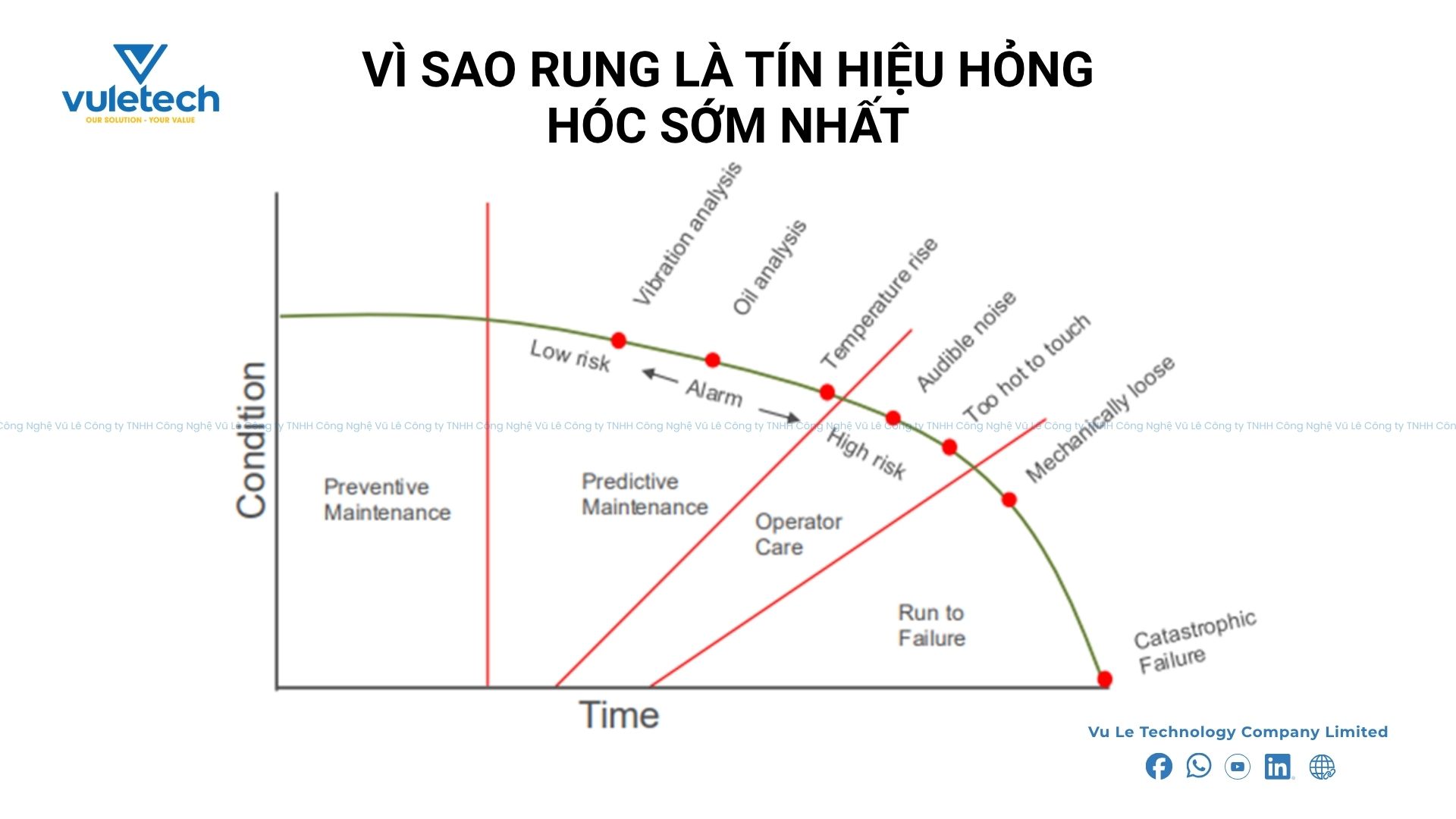
Compared to parameters such as temperature or electric current, vibration is considered a more sensitive and effective indicator for assessing the mechanical condition of rotating equipment. In most cases, mechanical faults alter vibration characteristics before heat is generated or a catastrophic failure occurs. For instance, bearing wear causes vibration amplitude to rise before temperatures increase, while shaft misalignment or imbalance creates abnormal oscillations before significant mechanical wear or structural damage sets in.
Consequently, relying solely on temperature or current monitoring often means issues are detected only when the equipment has already undergone significant deterioration. In contrast, vibration monitoring enables the early detection of anomalies, supporting condition-based maintenance strategies and allowing businesses to take a proactive approach to maintenance.
Key benefits include:
• Scheduling maintenance based on actual data
• Minimizing unplanned downtime
• Reducing major repair and replacement costs
• Enhancing equipment reliability and extending service life
V. Practical applications of industrial vibration sensors
Vibration monitoring is particularly well-suited for critical rotating equipment in utility areas or key production lines, where high operational reliability is required and downtime must be minimized. These assets typically feature high power ratings and high replacement costs, and their failure would directly impact the entire system.
Common applications include:
• High-power motors
• Pumps
• Compressors
• Industrial fans
• Gearboxes
• Chillers and cooling towers
By implementing continuous vibration monitoring, enterprises can track equipment health in real-time, detect early signs of mechanical failure, minimize unplanned downtime, and optimize maintenance and replacement costs. The collected data also supports the effective and systematic implementation of predictive maintenance strategies.
For large-scale plants—where the stoppage of a single piece of equipment can directly affect an entire utility area or production line—continuous vibration monitoring plays a crucial role in ensuring operational reliability and maintaining production stability.
VI. Vuletech Supplies Vibration Sensors in Vietnam
Industrial vibration sensors are more than just measuring devices; they are essential tools for transitioning from reactive to proactive maintenance. If you operate large motors, pumping or compressed air systems, or critical utility infrastructure, implementing early vibration monitoring ensures stable plant operations and long-term cost savings.
Vu Le Technology Co., Ltd. offers:
- Multi-signal sensor solutions (vibration, temperature, current, pressure)
- Rapidly deployable wireless CBM systems
- Intuitive dashboards with ISO 10816/20816 analysis
- Technical training on CBM and wireless sensing
- Support for site surveys and monitoring architecture recommendations tailored to your assets
Download vibration sensor datasheets and practical application guides to learn how to implement a vibration monitoring system for your plant.
Vu Le Technology Co., Ltd.
» Address: No. 7, Lot C2, Street 659, Phuoc Long Ward, Ho Chi Minh City
» Hotline: (028) 3620 8179 / 3620 8176 / 3620 8177
» Fax: (028) 3620 8178
» Email: info@vuletech.com