











In many factories, electricity costs consistently rank among the largest components of total operating expenses (OPEX). This is particularly true for systems that operate continuously—24/7—such as conveyors, fans, pumps, and packaging lines. Consequently, even a marginal improvement in motor efficiency can lead to significant annual savings on electricity costs. So, what distinguishes IE3 motors from IE4 motors, and is investing in high-efficiency motors truly worthwhile?
I. What percentage of factory OPEX does electricity account for?
Across many industries, electricity costs can represent 20–40% of total operating expenses (OPEX). In systems running continuously, motors may operate for thousands of hours each year. This means that increasing efficiency by just a few percentage points can yield substantial savings. This is why an increasing number of businesses are switching to high-efficiency motor models, such as IE4.
II. IE3 Motors: The common industry standard
IE3 (Premium Efficiency) remains a widely adopted standard in many factories due to the balance it strikes between initial investment costs and operational performance. With a reasonable upfront cost, ease of replacement, and widespread market availability, IE3 motors are suitable for a variety of standard industrial applications. However, compared to higher-efficiency models, IE3 motors do have limitations—such as lower efficiency and higher energy losses during continuous operation—which result in higher cumulative electricity costs over the long term.
Therefore, IE3 motors are typically suitable for:
- Intermittent operating systems
- Light- to medium-load applications
- Businesses that have not yet prioritized energy optimization
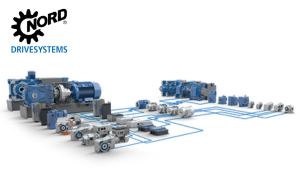
► Read more: Learn about Nord Drivesystems motors
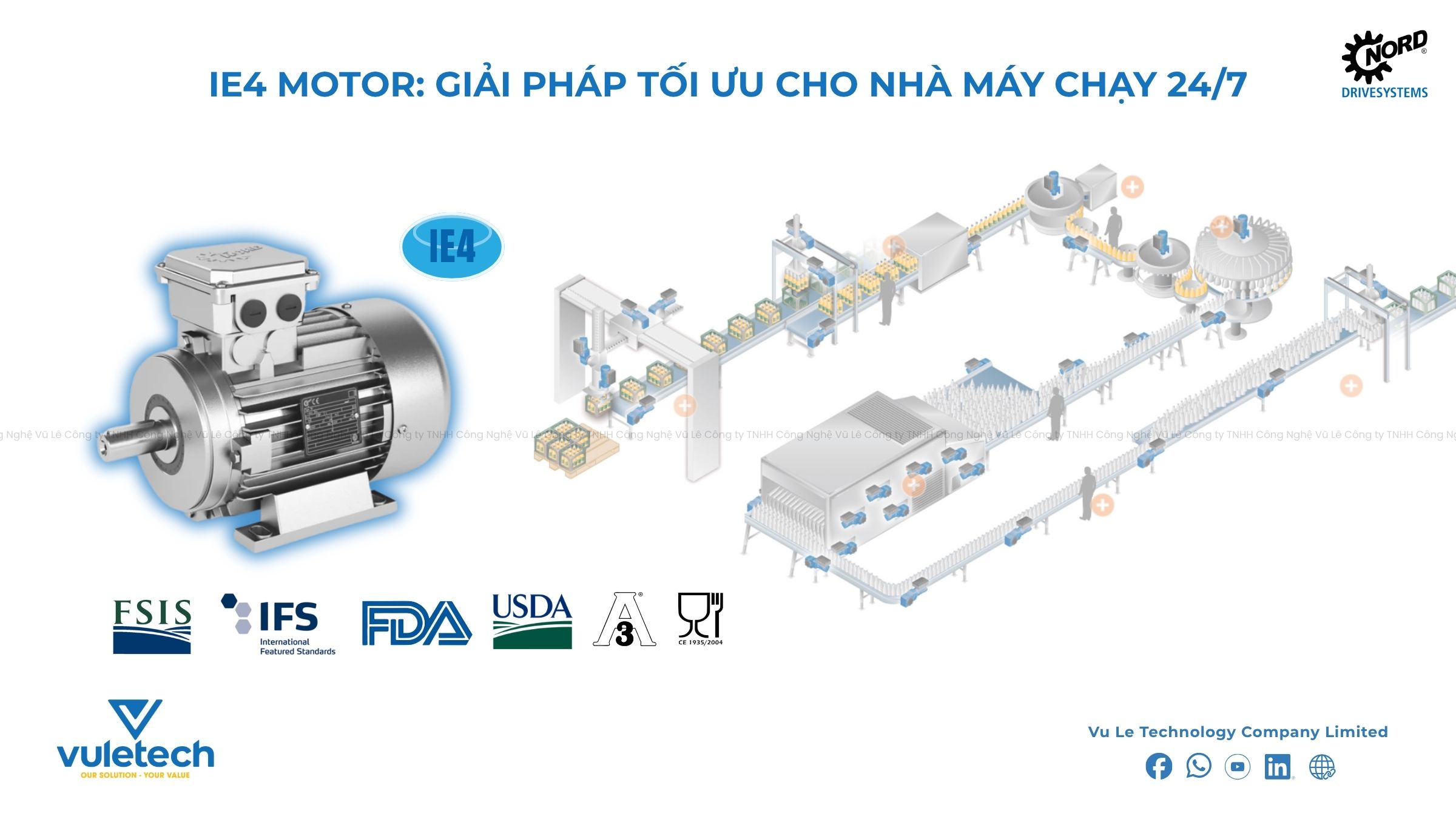
III. IE4 Motor: The optimal solution for 24/7 manufacturing plants
IE4 (Super Premium Efficiency) represents a generation of high-efficiency motors designed to minimize energy losses and optimize long-term operating costs. Compared to IE3, IE4 motors offer superior efficiency—reducing electricity consumption—and lower heat loss, resulting in cooler, more stable operation. Notably, IE4 motors maintain high efficiency even when not operating at full load, making them ideal for systems running continuously (24/7). These benefits are particularly significant in plants with multiple motors operating simultaneously, long runtimes, and electricity costs that constitute a major portion of total operating expenses.
Beyond electricity savings, IE4 motors offer the following advantages:
- Reduced load on cooling systems
- Enhanced operational stability
- Lower total operating costs (OPEX)
IV. How does IE4 save more energy than IE3?
The core difference between IE3 and IE4 lies in energy efficiency.
- IE3 (Premium Efficiency): The current common standard
- IE4 (Super Premium Efficiency): Higher efficiency, lower losses
In practice, IE4 motors can reduce energy losses by approximately 10–20% compared to IE3 models, depending on specific operating conditions. These savings stem from reduced heat loss, optimized magnetic design, and the ability to maintain high efficiency even when the motor is not running at maximum load. For systems operating continuously (24/7), these improvements lead to significant reductions in electricity costs and deliver clear, long-term value.
V. Real-world ROI: What is the payback period?
One of the most common questions is: “IE4 motors have a higher upfront cost—is the investment worth it?” The answer lies in the ROI (Return on Investment) analysis. Although the initial investment cost for IE4 motors is higher than for IE3 models, operating costs are significantly lower due to superior energy efficiency. For systems operating continuously, the payback period is typically just 6–18 months. Beyond this point, all electricity cost savings translate into direct profit, helping businesses optimize long-term financial performance.
V. Practical Calculation Example
Consider a system using a 15 kW motor that operates continuously for approximately 8,000 hours per year, with an average electricity rate of 2,000 VND/kWh. Comparing the efficiency of the two motor types, the IE3 achieves about 92% efficiency, while the IE4 reaches approximately 95%—a difference of about 3%. Although this margin may seem small, the practical impact is significant: electricity consumption can be reduced by thousands of kilowatt-hours annually, resulting in savings ranging from several million to tens of millions of VND per motor each year. If a factory operates dozens or even hundreds of such motors, the total energy savings become substantial, yielding a clear and significant cost advantage.
► Read more: How to select the right Nord motor
VII. When should you upgrade to IE4?
You should consider using IE4 motors in the following cases:
- Systems operating 24/7
- Large numbers of motors
- Businesses aiming to optimize electricity costs
- Goals to improve OEE and operational efficiency
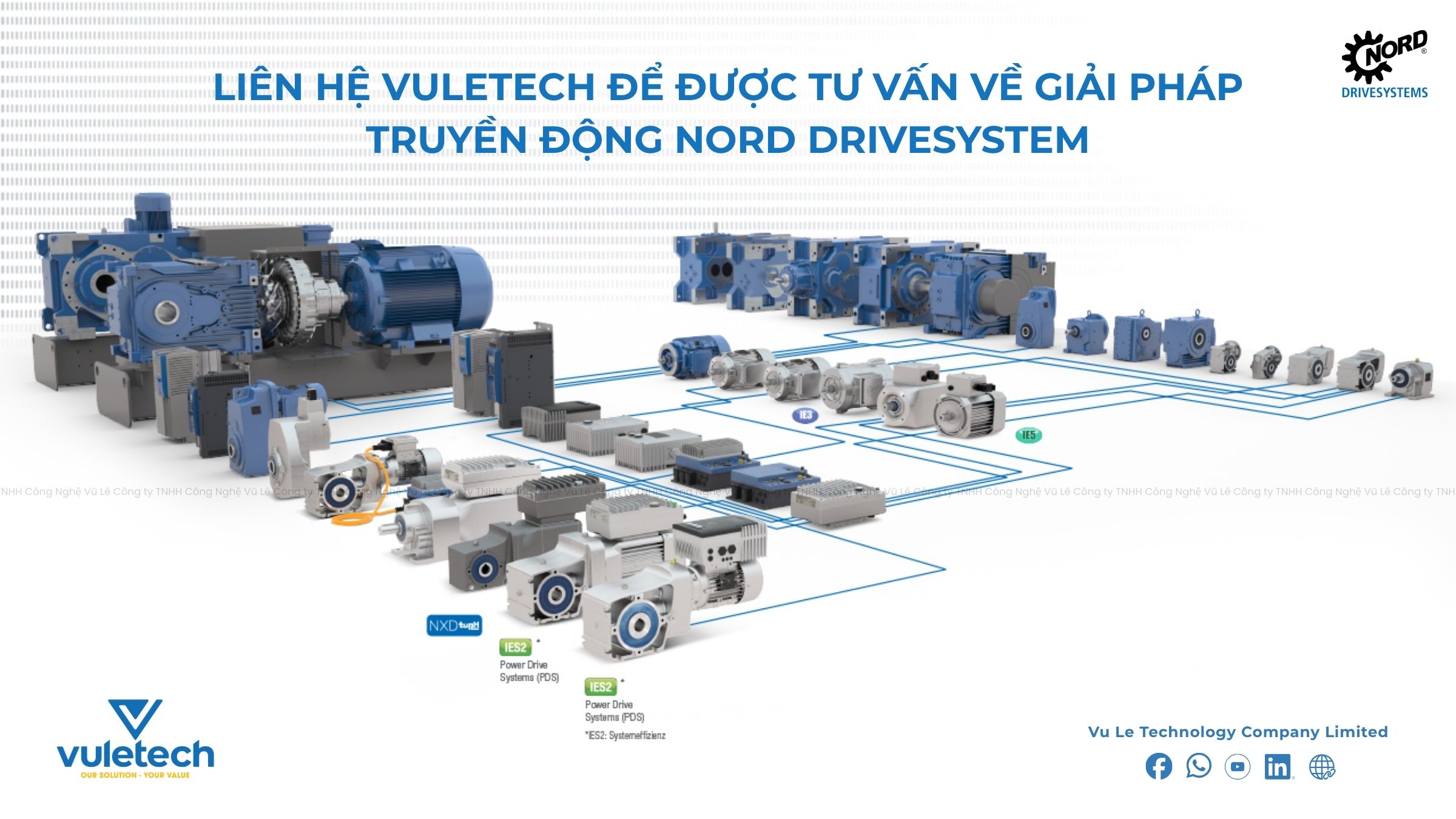
VIII. Contact Vuletech for consultation on Nord Drivesystems drive solutions
Upgrading to IE4 is not merely a technical decision but a long-term financial one. For continuously operating plants, switching to IE4 motors offers distinct benefits: significant energy savings, a shorter payback period, and sustained operational efficiency over time. Contact Vuletech for consultation on Nord Drivesystems drive solutions.
► Address: No. 7, Lot C2, Street 659, Phuoc Long Ward, Ho Chi Minh City
► Hotline: (028) 3620 8179 / 3620 8176 / 3620 8177 | Fax: (028) 3620 8178
► Email: info@vuletech.com